
No Room for Troubleshooting
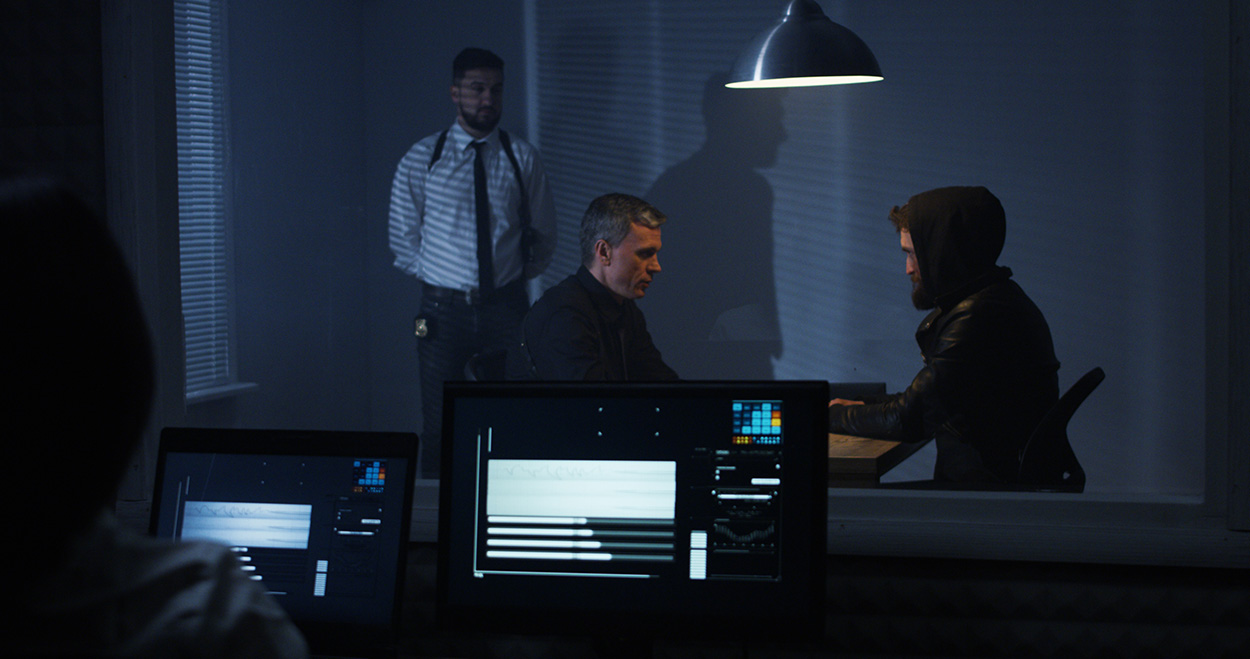
A forensic interview room is not the place to troubleshoot technology. The interviewer’s full attention needs to be on the child or witness in front of them, reading body language, following the conversation, and creating an environment where someone in a vulnerable moment feels safe enough to talk. Nothing about that process should be interrupted by a recording system that is confusing, unreliable, or dependent on remembering a specific sequence of steps.
Yet recording technology in interview settings has historically asked a lot of the people using it. Multiple buttons, separate systems for audio and video, settings that need to be checked before every session, all of it adds friction at exactly the moment when friction is least acceptable. If a recording fails partway through an interview, or a setting was configured incorrectly beforehand, the consequences are not just technical. An interview may need to be repeated, asking someone to recount a traumatic experience a second time, or a case may lose evidence that can never be recreated.
What One-Touch Recording Removes From the Equation
One touch recording exists to remove that risk from the equation. When starting a session is as simple as pressing a single button, the interviewer needs no technical training beyond the basics, and there is far less room for a mistake to interrupt the interview. The technology becomes invisible in the room, which is exactly where it belongs.
Simple to Use, Sophisticated Underneath
Simplicity at the point of use does not mean the system underneath is simple. In fact, the opposite is usually true. A reliable one touch system depends on solid engineering behind the scenes: redundant recording to guard against equipment failure, automatic time stamping and metadata capture for later admissibility, and secure storage that protects the recording the moment the session ends. Business Electronics (BEI) builds interview room systems around this idea, so the complexity stays behind the scenes and the interviewer only ever has to press one button.
Why Simplicity Protects the Evidence Too
This matters just as much for the evidentiary record as it does for the interview experience. A recording that fails, or one that was configured incorrectly because the process was too complicated, does not just create an inconvenience. It can compromise a case entirely, leaving investigators and prosecutors without the evidence they were counting on.
What to Ask About Your Current System
Agencies evaluating their current interview room setup should consider how much training a new staff member actually needs before they can operate the system confidently. If the answer involves a manual, a checklist, or a call to IT, that complexity is a liability every time an interview is scheduled. The best systems ask almost nothing of the interviewer beyond pressing one button and trusting that everything else is handled correctly behind the scenes.
In a setting where the stakes are this high, simple is not a compromise. It is the safest choice available, for the interview, for the evidence, and for the person being interviewed.